


Skip to content

Menu

The American Legal Blogger logo
HomeAboutContactSubmit Your BlogChannelsSubscribe
The American Legal Blogger logo
AboutChannelsPublishersSubscribeContact
The American Legal Blogger logo
Submit Your Blog
Search
Close

Start a Blog. Grow Your Practice.

Schedule Demo

Call Before You Dig: Company Faces Tort Claims for Not Calling First

By Katelyn Carson & John Mark Goodman on April 2, 2026
Email this postTweet this postLike this postShare this post on LinkedIn
Call Before You Dig: Company Faces Tort Claims for Not Calling First

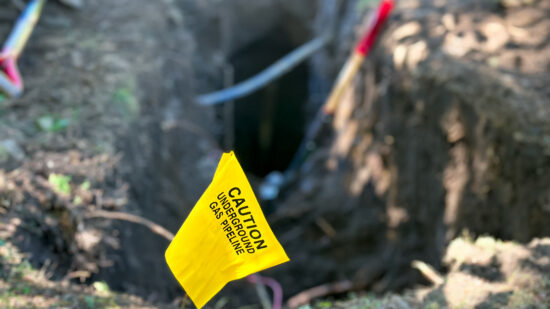
We all have legal duties. Some arise from contracts that we choose to enter. Others are spelled out in statutes or regulations. Still others are imposed by the common law. One of the most basic common law duties is the duty to exercise reasonable care to avoid injury to others. What constitutes reasonable care varies depending on the specific facts and circumstances of each case.  It is often an issue that a jury must decide only after a trial where both sides have an opportunity to present their side of the case. As one oil and gas company learned last week, reasonable care may require you to call before you dig (see Northern Natural Gas Co. v. American Warrior, Inc., Case No. 25-1120, 2026 WL 828722 (D. Kansas Mar. 26, 2026)).

In that case, the defendant drilled a guy-line anchor in the vicinity of a gas pipeline without calling the pipeline owner first. Upon learning of the drilling activities, the pipeline operator shut down the gas flow within the pipeline and inspected it for damage. While the anchor had luckily missed the pipeline (by 10 inches), the pipeline operator nonetheless sued to recover costs associated with reducing flow and inspecting the pipe for damage.

The defendant sought to dismiss the claim on various grounds, including that the applicable statute, the Kansas Underground Utility Prevention Act, only required notification by parties engaged in excavation activities, and it expressly exempts activities related to oil production. The court agreed that the statute did not apply to the defendant’s activities but nonetheless held that whether the defendant complied with its common law duty to exercise reasonable care was a question for the jury. The defendant must now defend a lawsuit that it may have otherwise avoided if it had heeded the familiar refrain: Call Before You Dig!

A copy of the court’s opinion is located here.

Photo of Katelyn Carson Katelyn Carson

Katelyn Carson is an associate in the firm’s Construction Practice Group.

Read more about Katelyn Carson
Photo of John Mark Goodman John Mark Goodman

John Mark Goodman has been with Bradley his entire legal career as a member of Bradley’s Litigation and Construction practice groups. He has an engineering degree from Georgia Tech and a law degree from Virginia. John Mark has had the privilege of representing…

John Mark Goodman has been with Bradley his entire legal career as a member of Bradley’s Litigation and Construction practice groups. He has an engineering degree from Georgia Tech and a law degree from Virginia. John Mark has had the privilege of representing clients throughout the U.S. and abroad in a wide variety of litigation and arbitration matters, including construction disputes, products liability claims, tax appeals, breach of contract/warranty, patent disputes, trade secret theft, and general commercial litigation.

Read more about John Mark Goodman
Show more Show less
  • Posted in:
    Real Estate & Construction
  • Blog:
    BuildSmart
  • Organization:
    Bradley Arant Boult Cummings LLP
  • Article: View Original Source

Subscribe to The American Legal Blogger

Subscribe Today
The American Legal Blogger logo
RSS Facebook LinkedIn Twitter
  • Home
  • About
  • Subscribe
  • Channels
  • Publishers
  • Contact

Welcome to American Legal Blogger

American Legal Blogger is a collaboration between the ABA Journal and LexBlog that brings together, in one place, the blogs, podcasts, and other insights and guidance generated by blogging lawyers across the US.

Learn more
Copyright © 2026, The American Legal Blogger. All Rights Reserved.
Law blog design & platform by LexBlog LexBlog Logo